Content

Review Technologies Trivia
Showing posts with label Technologies. Show all posts

Movie & Internet series (Finale): I wanna watch movie!

Don't know what you want to watch? Look here! From the previous article, we can find out information of movies, either new nor old one. However, what we should do if we really want to watch movie, but do not know which to watch? In this case, recommendations are needed! You will see some of the movie review websites in the following, hopefully they can help you to decide which to watch!


As I mentioned from the last articles of this series, IMDb is a movie database, but at the same time, it is a place for netizens to give their opinions. For example, you can view a list of reviews of 2012 from this website. The most important thing is, you can view them without login, of course, if you want to give a comment of films, you still need to register an account.


To view movie reviews, you can simply enter a movie name to view it; or you can start from viewing "now playing movies". Besides of these choices, you can select this from the top menu: Movie->Top 250. You can view the Top 250 voted by users. Interestingly, most of them are productions of 90s in Top 10. Then scroll down, you will see a column called "Category", you can view the top 250 from different categories. Maybe you can find your favourite from here!


Like its name rotten tomatoes, the worst movie will definitely have a grade of rotten tomatoes. The reason is, they use a meter called "tomato meter", more positive comments, the tomato would be fresher. The tomatoes are all came from critics of the Internet, you can read all their reviews online.

The Tomatometer measures the percentage of positive reviews from Approved Tomatometer Critics for a certain movie.
(Quoted from RottenTomatoes website)

Furthermore, you can view reviews by putting movie titles in the search bar or find from DVDs, now playing movies and the "Best of"! You can find the "best of the rotten tomotoes" by year, genre or all time. Also you can find the Academy Adward's winners on that page.

One of the funny page is the "certified fresh", what is "certified fresh"? See the description from Rotten Tomatoes!

Rotten Tomatoes awards the Certified Fresh accolade to theater releases reviewed by 40 or more critics (including 5 Top Critics) that score at least 75% or higher on the Tomatometer. A film remains Certified Fresh unless its Tomatometer falls below 60%.

It means, the movies which can get "Certified fresh" is guaranteed as Good by 75% of the users and 40 or more critics. Although they may not suit your taste, they are good movies in most of the users' heart.


3. MRQE (Movie Review Query Engine)
A new try! MRQE is founded in 1993, a website for movie reviews. After you arrive MRQE, you may attracted by the little orange bars after the movie titles. It is users' rating and critics' rating. You absolutely know what users' rating means, but what about critics' rating? The critics rating is a formation of critics in many medias, like newspaper, magazines, etc; For example, New York Times or The Wall Street Journal.


You can see all the critics' comments at the same time, if you do not have time, just look for the orange chart! It is a integration of the list of critics. Sometimes you may see a interesting phenomenon: the result between users and critics have a huge difference. To decide to believe who's opinion is depends on your wisdom and your feeling!


It is not just for now playing movies, you can look for the reviews by inputting movie titles on search bar or look into other sections, like DVD, Box-office result of US, etc. Besides of reviews, you also can view the news, trailers or blogs about that movie. You also can look for the recommendation of MRQE's staff, like 2009 summer movie guide, or simply select "Best by genre" or "Best of the 2000s". It does has a column called "Best by actors", but only a few actors can be selected.

For the "Best by genre", it does not like IMDb's one with traditional genres, the MRQE has many special genres, like "Best Workplace Movies", "Best Star Trek" or "Ranking Religion on Film". It is fun and special, you may find out the next movie you want to watch in the spare time!


It is a service provided by MRQE, it used Twitterverse to gain information from Twitter. Therefore, you can see lots of tweets on this site. Of course, as it gain information directly from Twitter, I guess it search tweets by keywords, so you may find something unrelated tweets.


In this site, you can find movies in theatre, DVD and upcoming movies' tweets, just like the main MRQE website. It is also a good way for you to know more people's comment from different sites!


This is also a site used Twiterverse to gain information from Twitter directly. The most significant difference is that it also calculated the results automatically, you can see the percentages of good or bad comments on movies easily, and when you touch the movie titles, it will show four reviews with pictures of good or bad. Moreover, you can sort those tweets in rating, popularity and names.


Unfortunately, as it is a new service, you can only find out new movies' comment on this site.

Also, as tweets are judged by computer automatically, it may occurred some misjudgement. Just like the one above, a user commented Christmas Carol as "highly recommended", however the system misjudged that comment as bad comment, maybe it caused by the negative keyword "unreal".

Nevertheless, I think the misjudgement is just minority case, they will not affect the percentages a lot, mostly 5%, I guess?


Umm...You still cannot find a movie to watch for? Try this!


It is a website for you to find movies that suit your unique taste. It is easy, you just need to input your favourite movie's name, click Like more, then see the results!

Picture Tutorial:


If you want to get the results from the front page, one word is needed:

like: <*input your favourite here*>

Input the whole phase above to the search bar on front page!

Then it will shows the result on the front page without accessing the information page of that movie. After complete your search, you can also use the genre from left to squeeze the search ranges. Although it does not require log in to view the results, but if you create an account, Juuni can help specifically help you to find movies you may like, also you can add some movies into your wishlist.


It is a website specifically recommend movies by clarifying your favourite movie types, it is not following traditional movie genres, they make an effort to re-categorize movies in special genres, like mood, it has five sub-categories: Suspenseful, Stylized, Exciting, Rough and Bleak. You may find your Mr Right on this site! Try it!

Conclusion
Before the century of Internet, movie reviews often seen on newspaper or other print media, however, Internet's bloom make lots of netizens can express their opinions on movies. As we can see, movie review's sites already became more and more integrated with those social communities websites, like Twitter, Facebook, and this definitely is the trend and future of movie reviews and Internet.

Also, movie producer also concern of the power of Internet communities and they can view the opinions from the public instantly after movies aired on theatres. Producers can receive different comments from the Internet, it can also be the tools for their self-improvements. Let's look forward to viewing their improvements!

Read More:
IMDb
RottenTomatoes
MRQE
Flicktweets
Twitcritics
Jinni.com

Twitterverse
Twitter API wiki

Digital movies and future Series (Finale) - 3D movies

Recently, lots of 3D movies come forth and become hot topic around the society, like the "UP", "Christmas Carol", "Avatar" etc. , these can also be called as "Digital movies". After we go through 2 articles, maybe you still do not understand, what is digital movies?

Digital movies, mean that we use digital method rather than using analog way to encode video and audio, just like video, they will use DV instead of film to produce video; for the audio, the simplest example is: analog is just like audio tape, the digital audio is like your MP3 file. If you want your AVI file to use sound from analog signal from the middle, you need to transmit it to MP3 or other audio format, it implies that if your audio length 1 hour and it is on the middle of the tape, you need to play to that location and re-record it into digital audio format for 1 hour. For the digital audio, you can just cut that length directly.

Then, our main theme: 3-D film!

Start our class in 3-D!


Thank you for indymogul's tutorial!

Now you may know, the original 3-D films need us to wear a 3-D glasses otherwise, you can only see the ghost of red and blue just like the previous tutorial. The Principle of 3-D film is, as human eyes have different angles (if you do not notice, try to close one of your eyes!), the 3-D film use the same principle, they use two cameras in side by side in 90 degrees angles in order to make audiences have an illusion of depth view. (See How do 3d glasses work!)


However, nowadays we can view 3-D films without using 3d glasses, thanks for the computer graphic! We simply call that type of movies as "pseudo-3D films" and they definitely do not need two cameras worked at the same time.

IMAX - The superb 3-D films producer.


Probably you may heard of IMAX (http://www.imax.com/), it is a motion movie format, it used 15/70 mm film and it is 10 times of the normal 35mm films, it means audiences can see every pixels clearly on the enormous screen. Also, in IMAX theatre, the layout of the seats will be steeper and there would have many small holes in theatre to keep the audio clearer and create realism. The audio system there would use IMAX Proportional Point Source System, a 6-channel system with uncompressed sound, so the audience can enjoy movies with clear sound.

Besides of that, the IMAX movie use a different approach rather than the previous red-blue-glasses approach, it encode two films for left and right movies and play it simultaneously, with the 3-D glasses of IMAX, audiences can receive two movies in the same time and create a vivid effect.

This is the IMAX movie trailer for 2010, Alice's Adventure in the Wonderland! (For a larger version, click here)


The only IMAX in Hong Kong is in MegaBox, a shopping mall in Kowloon, you can find its location in the Google map. Also, according to the news (Chinese version only), a new IMAX cinema will locate in Tsim Sha Tsui.

MegaBox's location:

View Larger Map


I have heard of 4-D, what's that?

4-D film, it means that besides of the 3-Dimension experience, you also can have a physical experience, like raining, or feel the perfume ... etc. However, in order to create these physical effect, its cost is too high, so you would only view them on some theme park like Disneyland or some small venue. Practically, in the next few years, the widespread of 4-D films remain to be impossible.

Conclusion

As the cinema use harddisk instead of film to show movies, the cost would be lower and it also helps 3-D movies build their realm. Moreover, more and more movies remake in 3-D, like Tron, the bloom of 3-D films would be continued for a long time.

This is the finale of this series, do you know more about present and the future of movies? I hope you will love this series! Thank you!

Read more!
How do 3-D glasses work?

IMAX official website

Hong Kong MegaBox's IMAX official website

尖沙咀新IMAX影院明年開幕 / MovieSoonHK (Chinese / Cantonese version only)

Digital movies and future Series(2) - Storage Media

What is the future of video and sound? The answer is... on the storage media! VCD, DVD, Blu-ray, HD DVD... I think you may familiar with these abbreviations, however, did you know their specifications and histories? Before knowing the future of sound, we can start with the historical journey of these storage media!

1. VCD, Video Compact Disc.
This is the first Digital media standard format in the world, established by Philips, Sony, JVC and Matsubushi. As its cost is low, now it spreads to the worldwide in a cheap price, and because of the low cost, easy to copy and without the protection of region code, VCD somehow still became a tool for pirate nowadays.

Let's see the basic specification of VCD:


Audio Format:
MPEG-1 layer 2
Bit rate:
224 kb/s
Sample rate:
44,100 Hz
Number of Channels:
2 (stereo)


Video Format:
MPEG-1
Resolution:


352×240 pixel /NTSC video
352×288 pixel /PAL video

Frame rate:


29.97 Hz (NTSC)
25 Hz (PAL)

Bit rate:
About 1.13 Mbit/s


As you can see, it resolution is so low and even the audio format is using mp2, not the one we most familiar with: MP3. The maximum minutes usually are 60 to 74 minutes, it means that it may not cover the whole in one disc, so it is common for VCD to have disc 1 and disc2.

Moreover, since it is using CBR(constant bit rate) for recording movie and audio, the quality of some complex scenes would be lower than VBR(variable bit rate). CBR means always use the same bit rate to encode something, VBR means the bit rates are changeable.

For example, to use the easiest example, like MP3, when you choose encoding some music or trans-coding from CD, after you use CBR for 320kbps, you will see the bit rates remain unchanged in the Windows Media Player or the other music player, like foobar2000. However, if you use VBR to encode the same music, you will found that the bit rate often changes, the lower for the quiet one, the higher for the complex one, like playing many musical instruments or echos at the same time.

Therefore, for the VCD, some complex scenes may not provide the best performance on screen.

2. SVCD, Super Video Compact Disc.
Since VCD's video and audio still have room for improving, the industries keep go ahead and create a new media called SVCD, Super Video Compact Disc. Just like its name, it is the super version of VCD.

Comparison between VCD and SVCD, let's see what it had improved!

Media:
VCD
SVCD
Audio Format:


MPEG-1 layer 2
MPEG-2
Bit rate:
224 kb/s
Cannot choose CBR/VBR
32 to 384 kb/s
Could choose CBR/VBR
Number of Channels:
2 (stereo)
1 up to 5.1-channel
Storage:
Up to 800MB
Up to 800MB
Video Format:
MPEG-1
MPEG-2
Resolution:


352×240 pixel /NTSC video
352×288 pixel /PAL video

480x480 /NTSC video
480x576 /PAL video
Bit rate
1.13 Mb/s
Cannot choose CBR/VBR
2.6 Mb/s
Could choose CBR/VBR

As you can see, the specification of SVCD highly improved the flaw of VCD. Interestingly, the SVCD format were first created by the China government's China Recording Standards Committee, it is even earlier than Philips and Sony union: Video CD Consortium's new product — HQVCD. At last, the China Recording Standards Committee co-operated with Video CD Consortium and make the SVCD standard in 1998.


Normally, most of the DVD players are not compatible with SVCD but some of the China products or products from big brands support SVCD.


3. DVD, Digital Versatile Disc / Digital Video Disc
The most common format of the last generation and it is still widespread after the appearance of HD DVD and Blu-ray. As the space of DVD increased a lot, also video and audio codec keep improving from VCD, make DVD got a better image than VCD and SVCD.

4. HD DVD, High-Definition/Density DVD.

HD DVD means a evolution of DVD, a High-Definition DVD. It is created by DVD Forum, supported by Toshiba and Warner Bros. However, as the Warner Bros advocates Blu-ray later and the turnover of HD DVD dramatically drops, cause Toshiba to relinquish this format war and stop the production of HD DVD and its player in 2008.

5. The winner of this generation, Blu-ray.

It is a format developed by Blu-ray Disc Association, mainly lead by Sony and has became the winner of the format war in this generation.

To know their performance, look at their comparsion on this table!
Media
DVD
HD DVD
Blu-ray
Audio Format
Dolby Digital (AC-3)
DTS
PCM(uncompressed sound/ lossless)
MP1/MP2
Dolby Digital
Dolby Digital plus
DTS-HD
MPEG Audio (lossy above)
DTS HD
PCM
MLP (lossless above)
Dolby Digital
Dolby Digital plus
DTS (lossy)
PCM
DTS HD
Dolby TrueHD (lossless)
Number of Channels:
1-7.1-channels
1-7.1-channels
1-7.1-channels
Storage:
Up to 4.7GB(single layer)
Up to 15GB (single layer)
Up to 25GB (single layer)
Video Format:
MPEG2
VC-1
H.264
MPEG2
VC-1
H.264
MPEG2
Resolution:
720×480 /NTSC Video
720×576 /PAL Video
1920x1080
1920×1080
Bit rate
9.8 Mb/s
29.4 Mb/s
40 Mb/s
The future of video and sound? Lossless.

1. Dolby True HD
 Click image to view its logo movie!

A lossless sound format developed by Dolby, according to its official specification, it has supported up to 14 channels and the maxium bitrates are doubled to 18Mb/s! Unlike Dolby's old products before, this TrueHD is lossless, it means that you can hear the raw, original sound from your home theatre with only one HDMI cable.
Technology Specifications
Sampling frequency: 44.1 kHz to 192 kHz
Sampling rate: Constant for all channels
Word length: Up to 24 bits
Blu-ray Disc™ channel support: Up to eight channels of 24-bit/96 kHz audio; designed to be expandable should the Blu-ray Disc standard adopt additional channels
Two- to six-channel support: Up to 24-bit/192 kHz
Maximum bit rate: Up to 18 Mbps on Blu-ray Disc
(Quoted from Dolby True HD website)

2. DTS HD
Click image to view its logo movie!


This is the product of DTS, it still compete with Dolby today. The DTS HD Master Audio is the rival of Dolby TrueHD as both of them support Blu-ray, HD DVD and they are lossless audio formats.
DTS-HD Master Audio Features
Lossless Audio with variable data rates up to 24.5 Mbps for Blu-ray Disc and up to 18.0 Mbps for the
HD DVD format
Up to 7.1 discrete channels with a sampling frequency of 96 kHz and 24 bits of signal resolution
Up to 192 kHz sampling frequency and 24 bits of signal resolution for 2.0 channels
Speaker Re-mapping with multiple speaker playback confgurations for 7.1 channel systems
Secondary Audio/Sub Audio Stream for supplemental audio content
(Quoted from white paper of DTS HD)
 As you can see, the resolution of video have a significant increase after the new generation of storage media's birth. Of course, so were the sound. From the oldest VCD to Blu-ray nowadays, the codec of sound or the sound system of these latest storage media had also undergone a big evolution.

Conclusion
As the generation tries to move on to high resolution and loseless audio, the trend of high definition would be continued by the industries. Maybe we can look forward the lossless video format for storage media in the next generation!


The finale of this series would be - 3D movies!  
Wait for it!

Reference:

Principles of digital audio by Ken C. Pohlmann, 2005, P.305
http://books.google.com.hk/books?id=VZw6z9a03ikC&pg=PA305


Technical Explanation of SVCD — Philips (pdf)


HD DVD, white paper in Japanese (pdf)


HD DVD - A Technical Introduction in English (PDF)

Warner Bros. Entertainment to Release Its High-Definition DVD Titles Exclusively in the Blu-Ray Disc Format Beginning Later This Year

Toshiba, HD DVD事業の終息について

Dolby TrueHD official introduction

White paper of DTS HD (pdf)

Digital movies and future Series(1) - Cinema Sound System

Hello! I think all of you must have seen many movies in the cinema, but did you know the technology system of the cinema? Bang! Bang! Will you feel surprised by the sound in the cinema? Well, sometimes I will. However, did you know the sound system they used where you are sitting? First, I would introduce the sound system we are using nowadays!

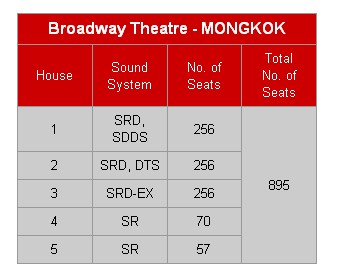
Look at this!

From the Broadway website, a cinema in Hong Kong, we can see something like SRD, DTS, etc. They are the abbreviations of the sound system developed by Sony and Dolby.

First, did you know this logo?


Yes, it is Dolby, definitely you did see its logo before some movies started. Dolby Digital is a company established by Ray Dolby, he also founded the "Dolby Laboratories" to technically develop the sound system, the first creation is a noise reduction system.

At first, the 35mm and 16mm film only support mono sound system, as it did not support stereo system, the atmosphere created for the audiences would be reduced. However, the Dolby Digital Sound could solve this problem since it can handle sound into stereo or more channels and provide a surround sound at the cinema. From the first Dolby stereo system in 1975 to now, Dolby has developed different types of sound system and it successfully became standard of the movie industries, so when you sit on the cinema, you are enjoying the fruit of Dolby laboratories.

1. Dolby Digital
This is analog film sound format first used in 1992 by the movie "Batman Returns". It is using multichannel to play sound and it is called as 5.1-channel.

Click the logo to view logo movie of Dolby Digital!


Dolby Digital Benefits
Delivers a worldwide standard in surround sound
Enables up to 5.1-channel surround sound for an enveloping audio experience
Ensures excellent audio quality for any Dolby Digital soundtrack
(quoted from Dolby official website)
As you can see, it is the prevalent standard around the world, and you can enjoy it on Broadway and many other cinemas!

2. Dolby Digital Surround EX
It is also called as Dolby Digital Surround Ex, the name we can see on the Broadway website is SRD-EX, developed on 1999.

Dolby Digital EX takes the Dolby Digital 5.1-channel setup one step further with an additional center surround channel (reproduced through one or two speakers) for extra dimensional detail and an enveloping surround sound effect.
Feature films originally released in Dolby Digital Surround EX (the cinema version) carry the encoded extra surround channel in their subsequent DVD releases, as well as onto 5.1-channel digital satellite and TV broadcasts.
(quoted from Dolby official website)

What is 5.1-channel? They usually included the left, center, right and left,right surround, these five channels could be called as 5-channel. What about the "0.1" channel? It is implying the Low Frequency Effect (LFE) channel, which specialized for those low frequencies sound between 3-120Hz only, this "0.1-channel" could increase the reality of the sound. Therefore, the 5.1-channel usually means the left, center, right and left,right surround and the LFE channel.

For the SRD-EX, it is different with the previous SRD system in 1992, it adds a center rear channel to the original 5.1 system, and it actually has 6.1 channels. Although it is a product of 1999, cinemas are still using this system on their theatre.


Then,  tell me more about DTS!
What is DTS? It is the abbreviation of Digital Threatre Systems developed by the DTS Inc. It is the main competitor of Dolby and actually DTS developed many sound systems in attempt to defeat Dolby's system.

3. DTS Extended Surround (DTS-ES) 

Click logo to view the logo movie!

Played back with a DTS-ES capable receiver and a 6.1-speaker layout, a movie encoded in DTS-ES will dramatically intensify the DTS surround effect. You’ll clearly hear sound effects — such as footsteps coming up behind you — along with other sounds that move front-to-back, and from side-to-side behind you. Even with an older DTS-capable receiver and a 5.1-channel speaker layout, you’ll still hear the center surround channel information; it will be “matrixed” or mixed in between the rear speakers. In either case, you’ll get the fuller, more realistic audio that comes with all DTS formats.     (quoted from DTS official website)
This is the sound system developed by DTS and exclusively used in cinemas, also it mainly compete with Dolby's SRD-EX and Sony's SDDS. Its previous version is DTS SURROUND, which only had 5.1-channel, and the ES version increased to 6.1-channel.

All above are for Dolby and DTS systems, what about Sony's?

4. Sony Dynamic Digital Sound (SDDS)
As you see, it is the abbreviation we saw from the Broadway website: SDDS. It is developed by Sony and exclusively for cinema sound system in 1993. It used 8-channels, included five front channels, two surround channels and one sub-bass channel, actually it is a 7.1-channel system. However, it is quite expensive for companies to produce in 7.1-channel, only 101 films used fully 7.1 channel from 1993 to 2007 June, according to Sony's official data in its website.

Since SDDS's late arrival and its expensive cost, the mainstream of movie sound system still are Dolby Digital and DTS's realm. After this belief introduction, do you know more about the sound system of movies and cinemas? 

At last, what is the future of sound? High Definition!
Let's look forward to the next article of "Digital cinema and future Series(2) - Storage Media"!

Reference:
DTS official website

Dolby Digital official website

Logos

Sony SDDS official website

台灣電影筆記(Chinese version only)

All the logo copyrights are belonged to their own companies.

Movie & Internet series (1): How can we know movie information from the Internet?

Nowadays, movie has became one of the prevalent entertainment in Hong Kong. It is easy for us to find movie information through the Internet.


Then, how can we found out current movies' information in Hong Kong?

It is easy, first for the current or upcoming movie in Hong Kong, you can use these websites:

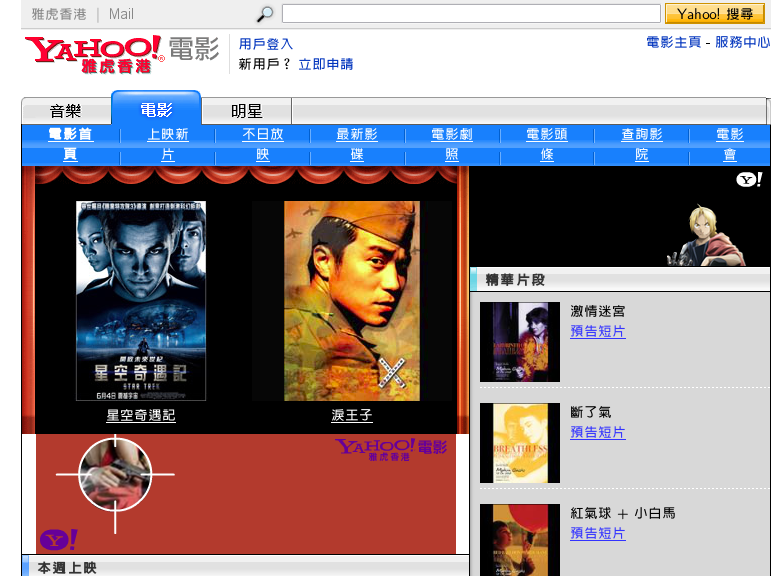
1. Yahoo! Movie (Chinese Version only)
http://hk.movies.yahoo.com/
In this site, you can check the synopsis of current movies and upcoming movies. Also, it has a column for the introduction of latest DVDs release.


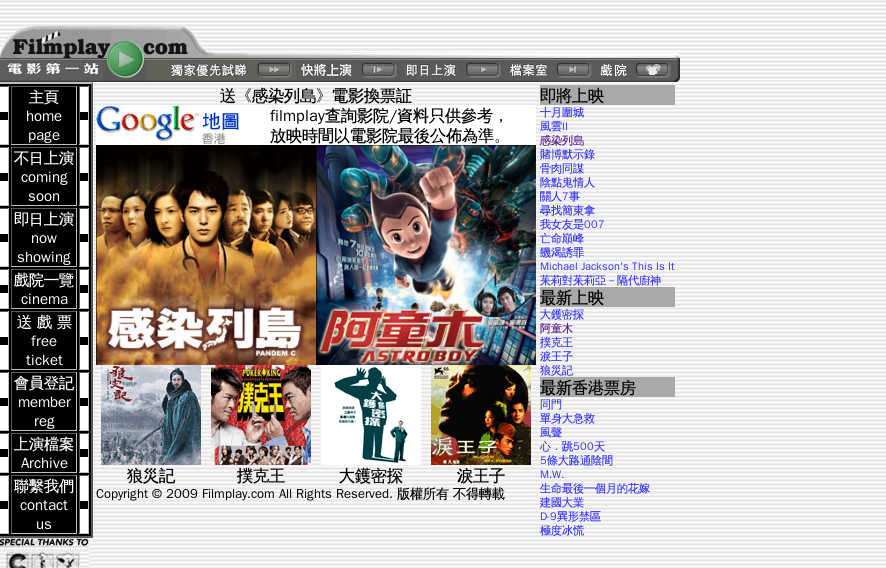
2. Filmplay.com (Chinese Version only)
http://www.filmplay.com/

Here, you can check for the synopsis of the current and upcoming movies in Hong Kong, also you can use the tool of Google Maps in this site to check which cinema had provided which movies.


3. Broadway circuit (Chinese & English version provided)
http://www3.cinema.com.hk/revamp/html/index.php?lang=e

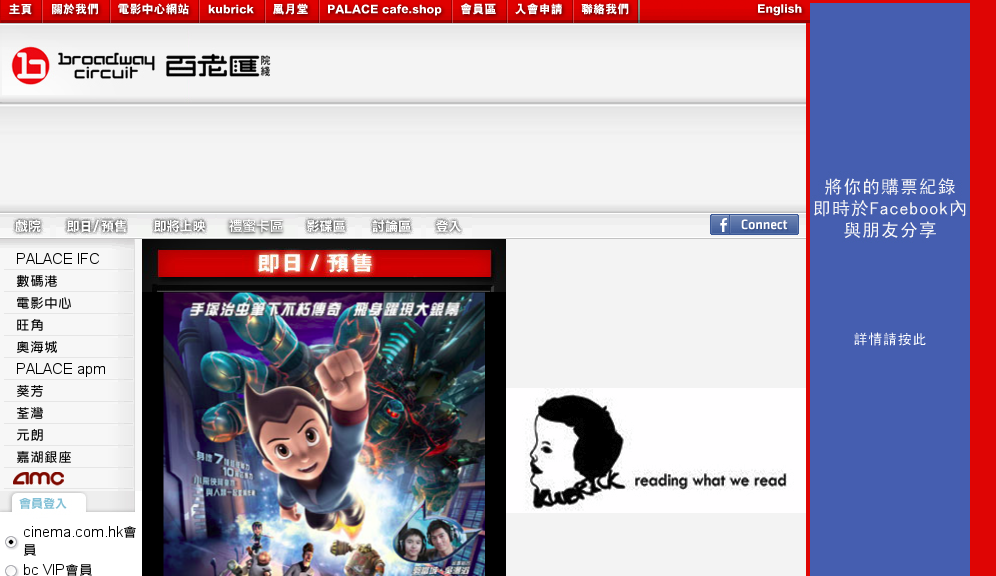
It is the official website of Broadway, you can use their website to check the current and upcoming movies' information and trailers of current movies. Moreover, you can buy tickets through this website, but you need to sign up an account first.


Okay, but what should I do if I want to find an international one?


1. Apple - Movie trailers
http://www.apple.com/trailers/

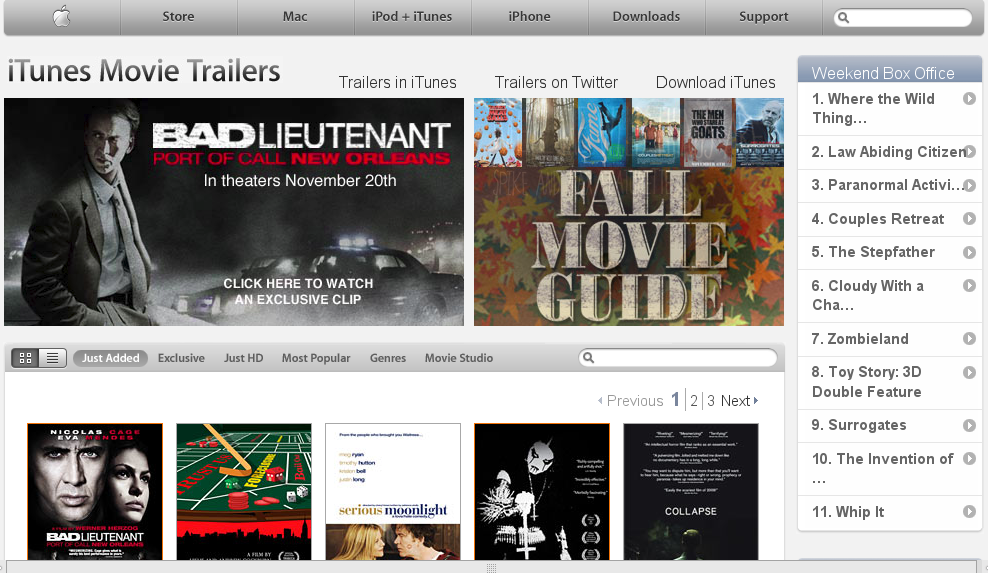
It is the movie trailer website in Apple, you can find out some of the current or upcoming movies' synopsis, official websites and trailers in different resolutions, for example, the majority of them provides a High-Definition videos for the trailers, you can choose among 480p, 720p and 1080p. Also, you can view the box-office on this week.


2. The Internet Movie Database (IMDb)
http://www.imdb.com/

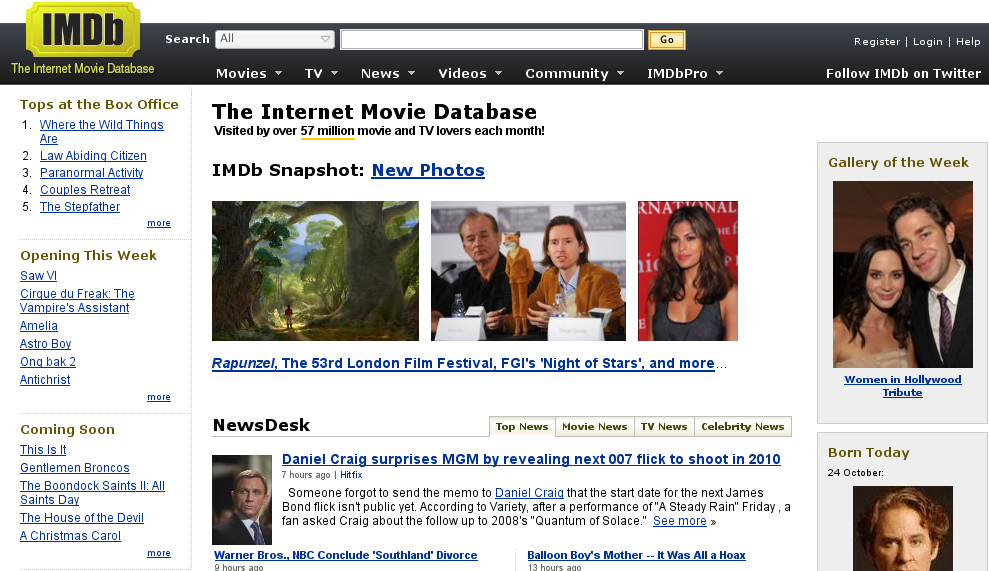
This is the biggest Internet database of movies. You can found out the current and upcoming movies' information bu clicking the left column: "Opening this week" and "Coming soon".There will show some images and the basic information of the film. Also, there is a message board, you can see some comments of that movie too. If you want to buy DVD or Blu-ray, they would also lead you to the amazon pages.


What should I do if I want to find some information of the old movies?


1. The Internet Movie Database (IMDb)
Sure! The Internet Movie Database (IMDb) can give you a favour! You just need to type the movie name on the search bar, then you can find the movie you like! However, for the Hong Kong films, such as "Shaolin Soccer", after you input the name of the movie in the search bar, you would find that the results show the film name on Cantonese Pinyin: "Siu lam juk kau", it would not show the international title on the heading.


2. Chinese movie database (Chinese only)
http://www.dianying.com/

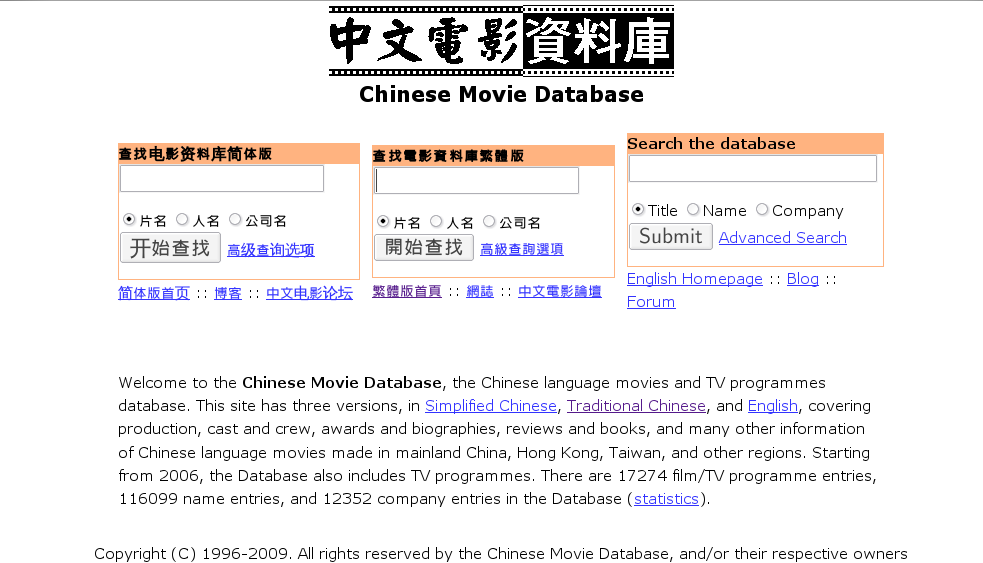
For the Chinese movies, you may find it on this database. Also, Just like I had done on IMDb before, I tried to find "Shaolin Soccer"(2001) on this database and it can find it successfully. However, when I tried to find other Hong Kong movie such as "Golden Chicken" (2002), I cannot find it on this database, but on IMDb. For the latest movies, it seems to be no problem. This is an alternative way for those who want to find Chinese movies on a database in Chinese.

So, you see? To find the latest information on the Internet is just a piece of cake! If you want to know more about movies, expecially current and upcoming movies, visit these sites!


Next: Movie & Internet series (Finale): I wanna watch movie!

 
Moviezine!. Design by Wpthemedesigner. Converted To Blogger Template By Anshul Tested by Blogger Templates.